With spring wrapped up and summer arrived, the hustle and bustle outdoors is in full-swing. The animals are busy; some raising their young while others are stockpiling for winter already! And some, like this Eastern Bluebird, are busier than the rest.
Elegant Saboteurs
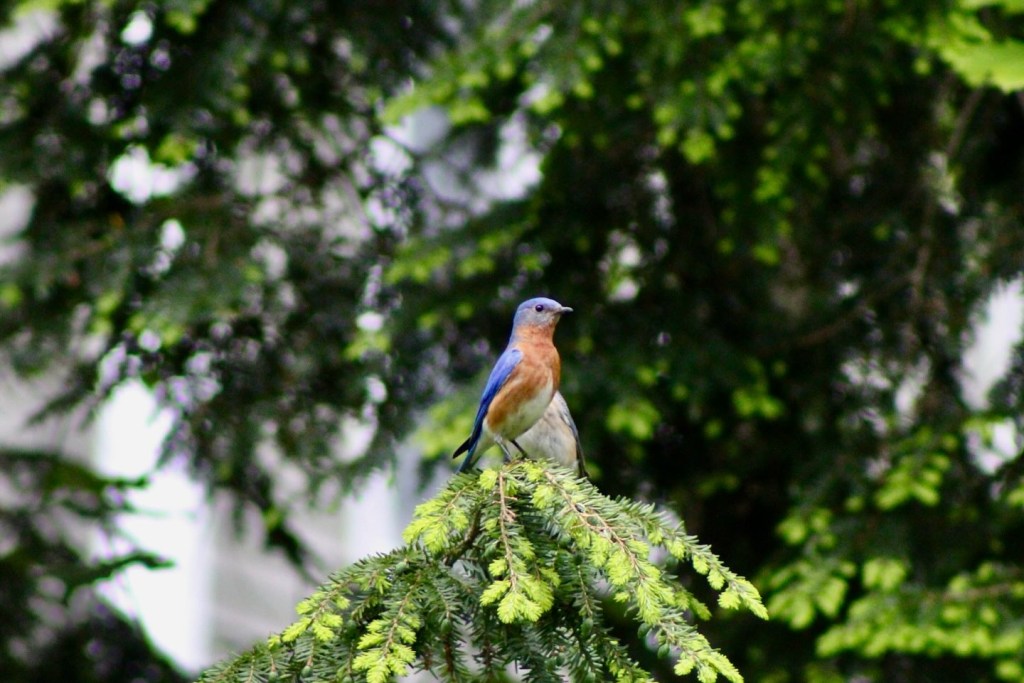
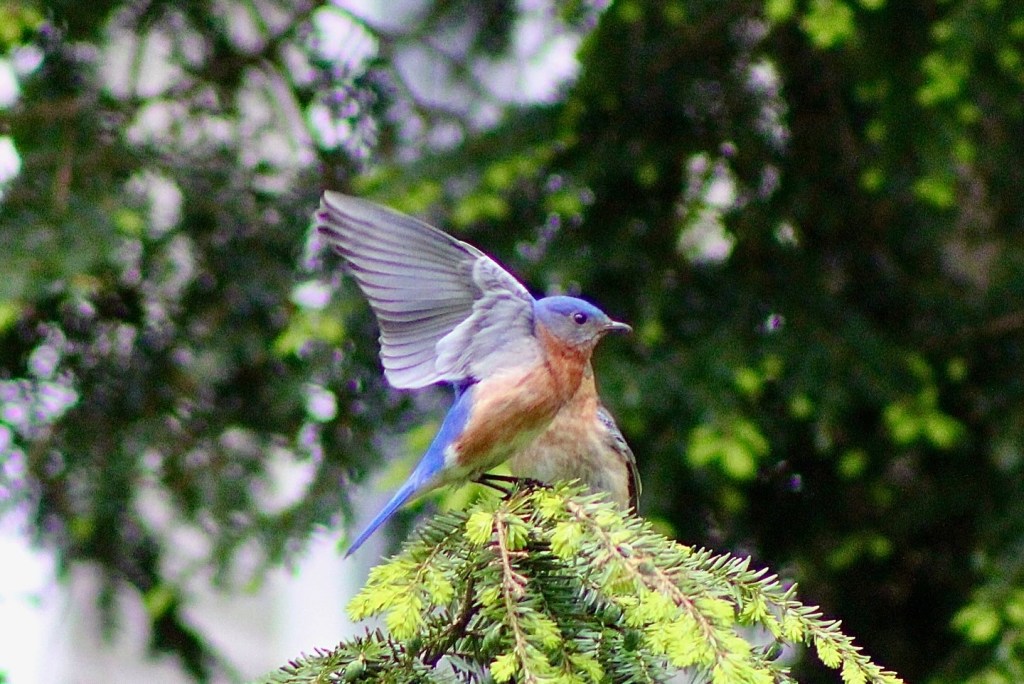
The male Eastern Bluebird is easily identifiable and a fan favorite for many bird enthusiasts. It’s a vibrant orange/brown breast contrasts perfectly with an intense blue coat. These colors are at their most vibrant during mating season.
On the other hand, the female Bluebird has a more humble expression of colors. Her breast is a subtler brown and her coat a softer blue-gray.
Both sexes of Bluebirds are designed to be elegant and lethal – like ninjas in our own backyard. A bluebird has impeccable eyesight, allowing them to spot insects from 60 to 100 feet away. After locating it’s meal, it has a variety of maneuvers in its arsenal to execute a successful hunt.
One method requires patience. The Bluebird will sit atop a perch, scanning and waiting. When an arthropod is within a suitable distance, it will stealthily swoop down and claim a helpless victim. But, the Bluebird’s diet does not just consist of helpless bugs. In fact, with their tactical procedures, unsheathed talons and agile movement, they have been observed subduing larger prey. This includes; tree frogs, salamanders, shrews and even snakes! (And when all else fails, they will happily settle for berries too.)
On the flip side, a clever hunter like the bluebird is still in the middle of the food chain. Larger fauna like bobcats, house cats, chipmunks, hawks and raccoons will be glad to hunt Bluebirds. Other birds and even wasps will also battle our blue buddies due to their nesting habits.
Family First
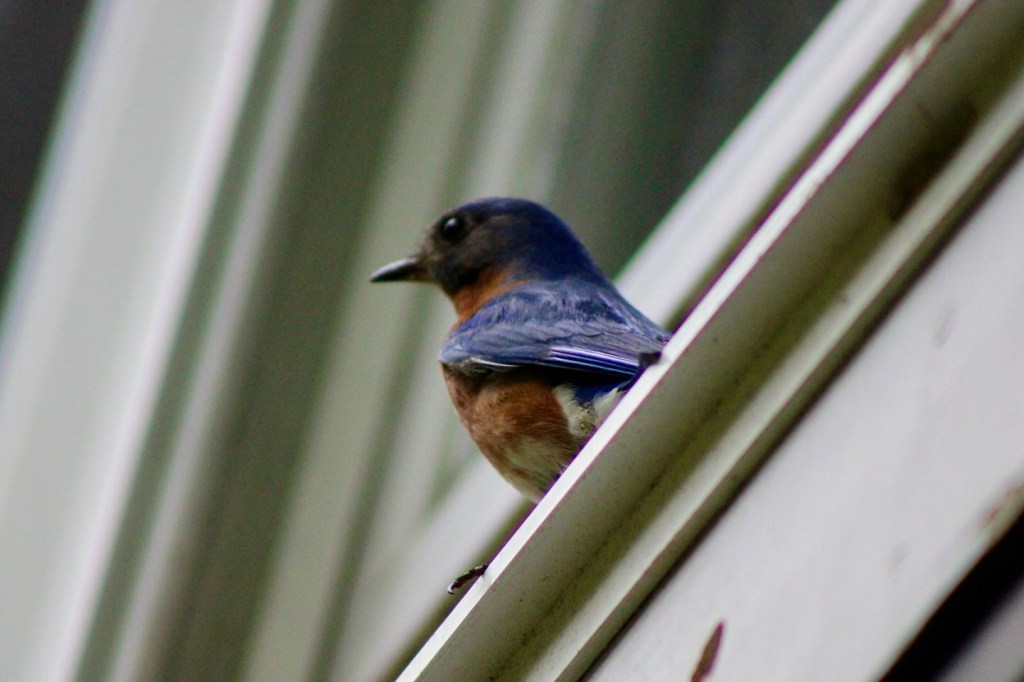
A bachelor Bluebird can only win over a lucky lady if he can provide a home. Like this fella I observed, the male will bring nesting materials to a wooden cavity and start a courtship dance. He flies in and out, flashing his cerulean wings. Once he gets his girlfriend, they will become a monogamous pair for life.
Bluebirds don’t actually build their own nests, as they are cavity nesting birds. This means that they bring materials to a pre-made, sheltered hole. This can be a hole in a tree from a previous resident, or a birdhouse. The female does most of the building while the male protects and finds food.
Once the happy couple is all moved in, the female will lay multiple broods per year consisting of 3-7 eggs. After the eggs hatch, both parents will help raise the young. In the summer months, the nestlings can move out in as little as two weeks. If they are a late hatch, the youngsters will stay with their parents through the winter.
Fan Favorite For A Reason
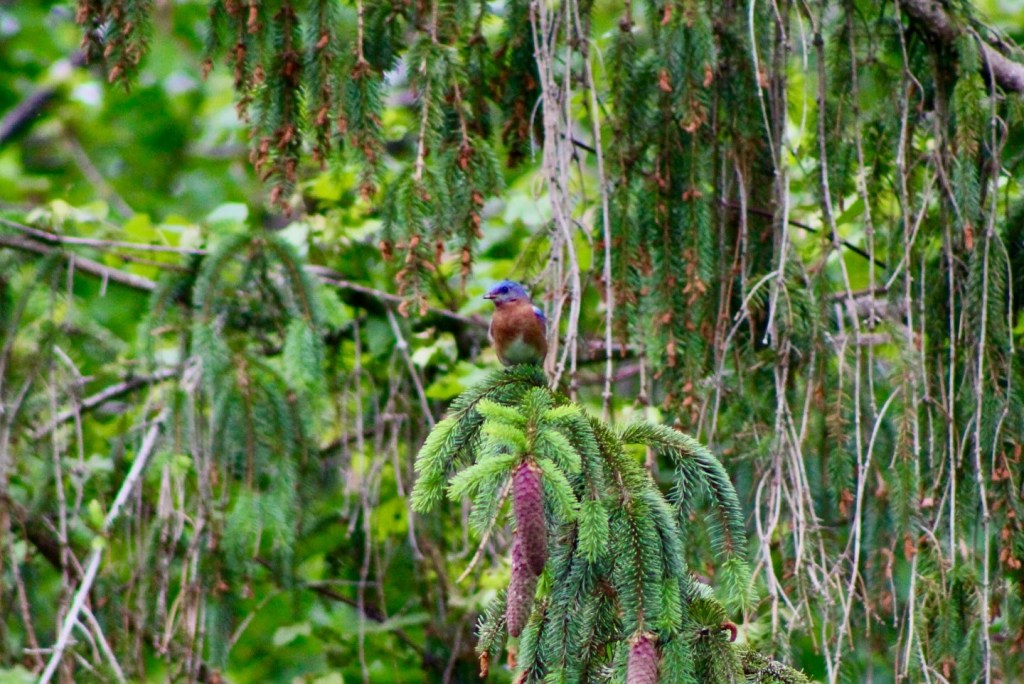
The Eastern Bluebird and its vibrancy brings a lot of attraction to begin with. Their personality is almost as loud as their colors. You can watch them prowl around your yard, flying from tree to tree. And listen to them sing as they talk to their mate, warn their friends and defend their home. Additionally, the utility of controlling bug populations is a benefit we humans appreciate. We should all take some time to befriend our little, blue neighbors.
Works Cited
- Begazo, Alfredo. “Eastern Bluebird.” Avian Report, 4 June 2023, avianreport.com/eastern-bluebird/.
- “Eastern Bluebird Overview, All about Birds, Cornell Lab of Ornithology.” Overview, All About Birds, Cornell Lab of Ornithology, http://www.allaboutbirds.org/guide/Eastern_Bluebird/overview. Accessed 6 June 2025.
- “Eastern Bluebird.” NH Audubon, 20 Feb. 2024, stateofthebirds.nhaudubon.org/bird_database/eastern-bluebird/.


Leave a Reply