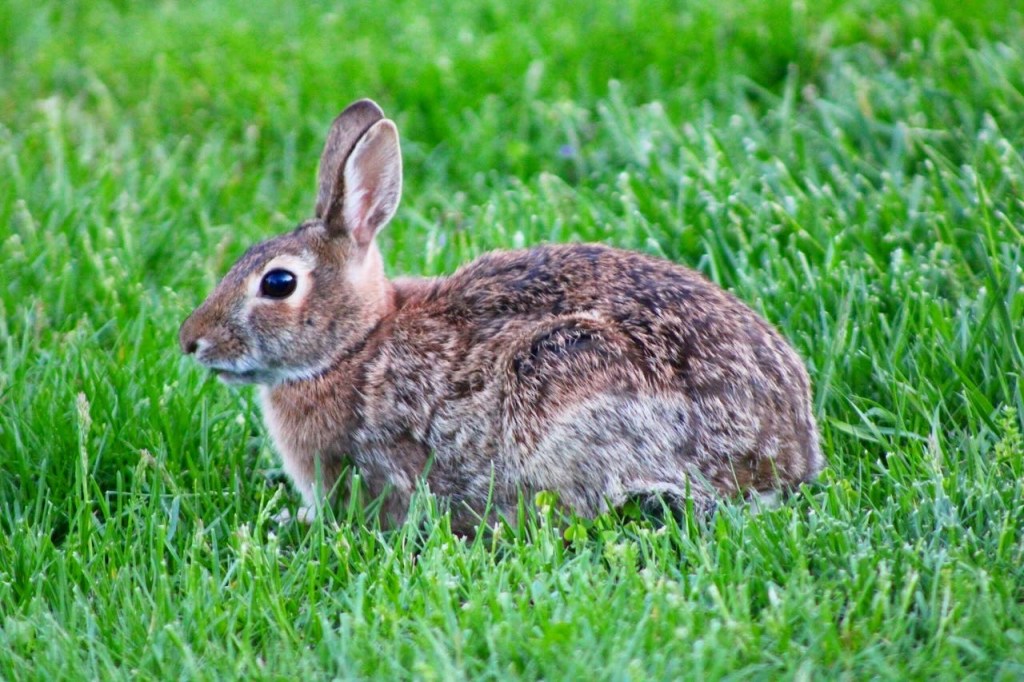
Spring has sprung, and the animals on the east coast are as active as ever! All over our yards, there are critters running, flying, and scurrying around after a long, cold winter. These fluffy fellas, in particular, emerge in abundance, and from my experience, seem to multiply quickly throughout the summer. There’s a good reason why they have a sophomoric expression referring to their mating patterns.
Doppelgängers
Eastern Cottontails, or Sylvilagus floridanus, are not to be confused with their nearly identical look-alike species, the New England Cottontail. Although they share innumerable similarities, these species do not interbreed, but do compete for territory. Typically, the Eastern Cottontail is more likely to make its home away from the forest and natural cover due to its superior eyesight, which helps it evade predators and live within residential areas. The Eastern Cottontail is more likely to have a white dot on its head, but apart from that, there is almost no way to differentiate the two species by sight alone.
Behaviors
This fuzzy herbivore reproduces multiple times throughout the spring and summer months. Males will fight each other for mates and then “dance” with a female. Gestation periods are about a month long, and each litter contains 3-8 “kits.” Nearly half of these young “does” and “bucks” will die, but the others have a life expectancy of approximately two years.
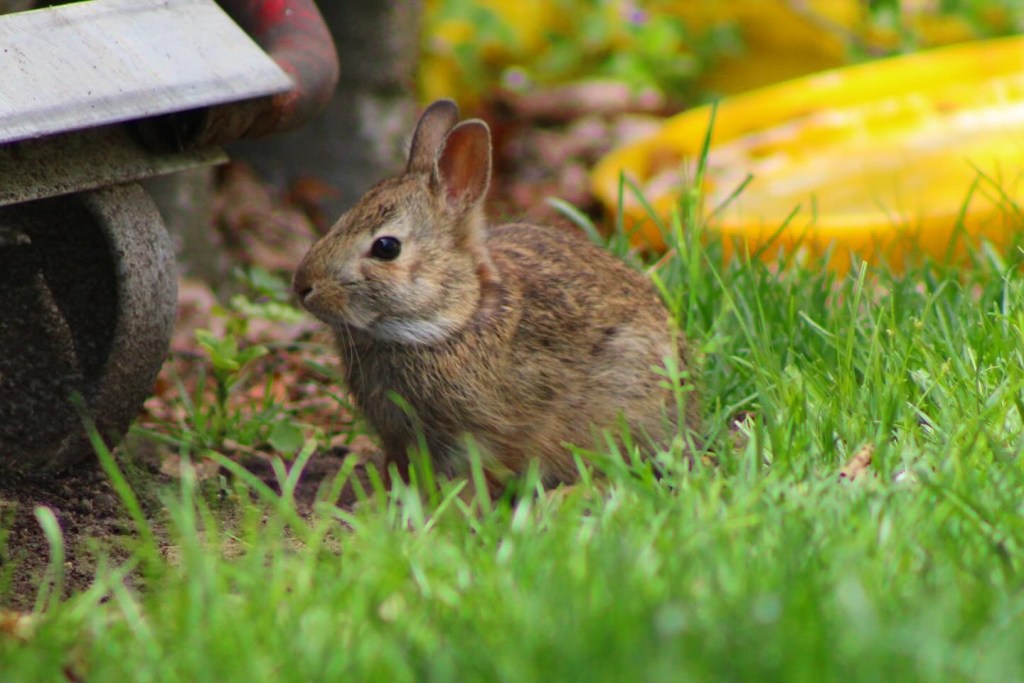
Building nests and burrowing underground to attempt a “predator-proof” home, the cottontails are typically nocturnal and like to forage during low-light hours. Woody parts of plants, such as twigs and bark, are not an uncommon part of their diet, but they will primarily stick to veggies, clovers, and fruits.
Although less active, cottontails do not hibernate in the winter and remain active all year round. In the winter months, the cottontail may travel up to a mile away from its home to look for food. However, in its lifetime, it will most likely not venture outside of a 1.5-acre area.
Resourceful Warriors
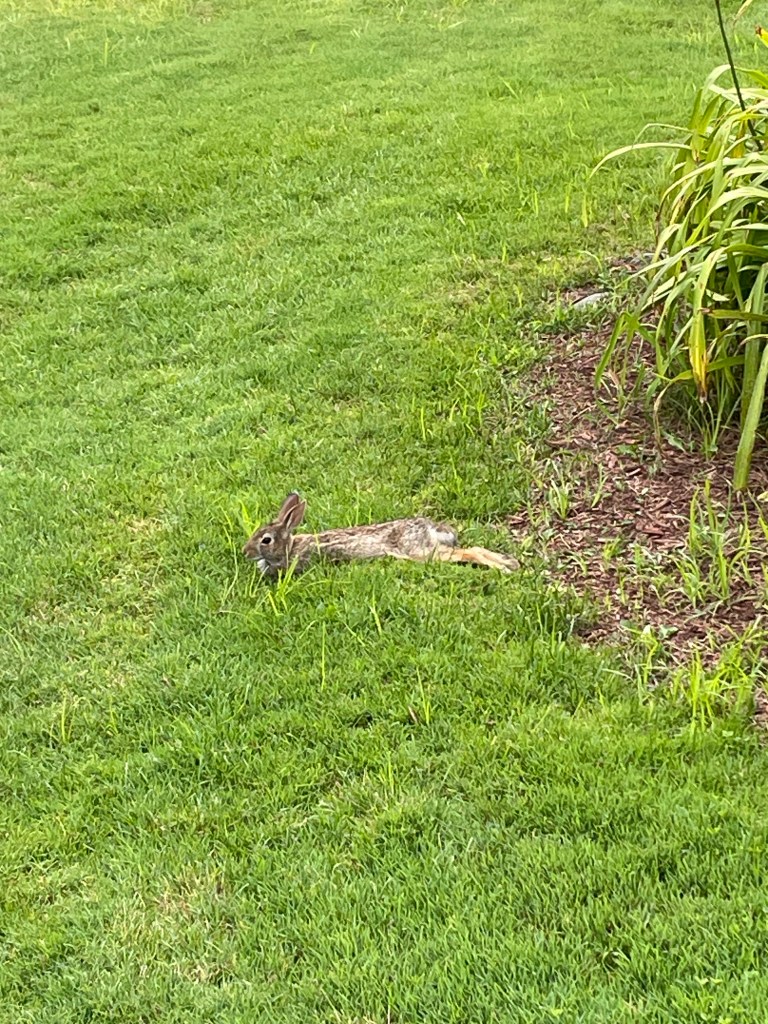
This picture of a lounging friend watching my friends and I tee-off may not show it, but generations of fighting for survival has made a species of fierce warriors. Their resourcefulness knows no boundaries.
For example, if needed, they will invade other animals burrows, like woodchucks, skunks and foxes, to avoid predators. On the flip side, their territoriality incites violence for anything willing to infiltrate their homes.
Most of their life is dedicated to avoiding predators and the sheer population makes them a prime, protein-packed target for hungry carnivores. Our little friends will stand up on their hind legs to listen for hunters and use vocalizations to warn their community of danger. When being chased, cottontails can dash at speeds around 18 mph. They instinctively run in zig-zags which confuses predators and throws off their scent patterns. Despite being equipped with this evasiveness, predatory encounters are often avoided due to their impeccable camouflage.
To drive home this point of resourcefulness, cottontails are coprophagous. They eat poop. Whether it’s their own or another animals they can consume feces for additional resources. You may think of yourself as resourceful, but when it comes down to it, would you eat poop? Probably not.
Bunnies Are Badass
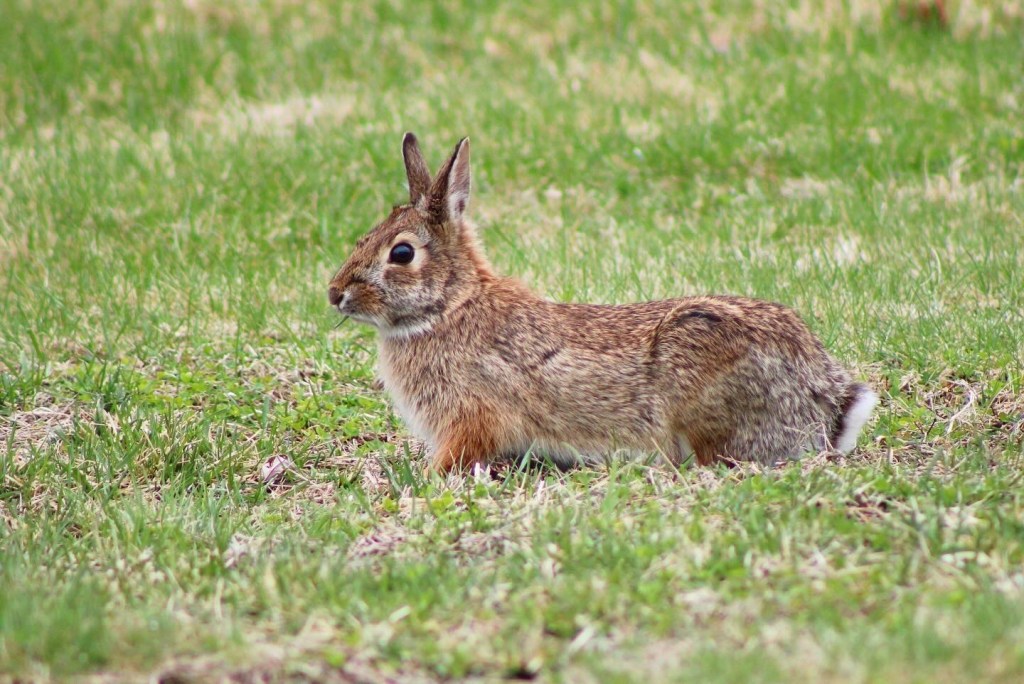
To us, bunnies are just another animal that we see out our backdoor or that our dogs chase into the woods. But life as an eastern cottontail is one of constant survival. Little warriors that fight for and defend their homes, who are constantly hunted by giants that can scoop them up into the air or end their life with a snap of the jaw. And when all else fails, they are willing to look death in its eyes and fight back. They are fearless and play to their strengths. A very admirable way of life.
Sources Cited
“Comparing Cottontails.” NH Rabbit Reports, 6 Dec. 2021, http://www.nhrabbitreports.org/species/comparing-cottontails.
“Cottontail Rabbits.” Mass Audubon, http://www.massaudubon.org/nature-wildlife/mammals-in-massachusetts/cottontail-rabbits. Accessed 14 May 2025.
“Eastern Cottontail – Sylvilagus Floridanus – Natureworks.” New Hampshire PBS, nhpbs.org/natureworks/easterncottontail.htm. Accessed 14 May 2025.
 Our Backyard Universe
Leave a comment