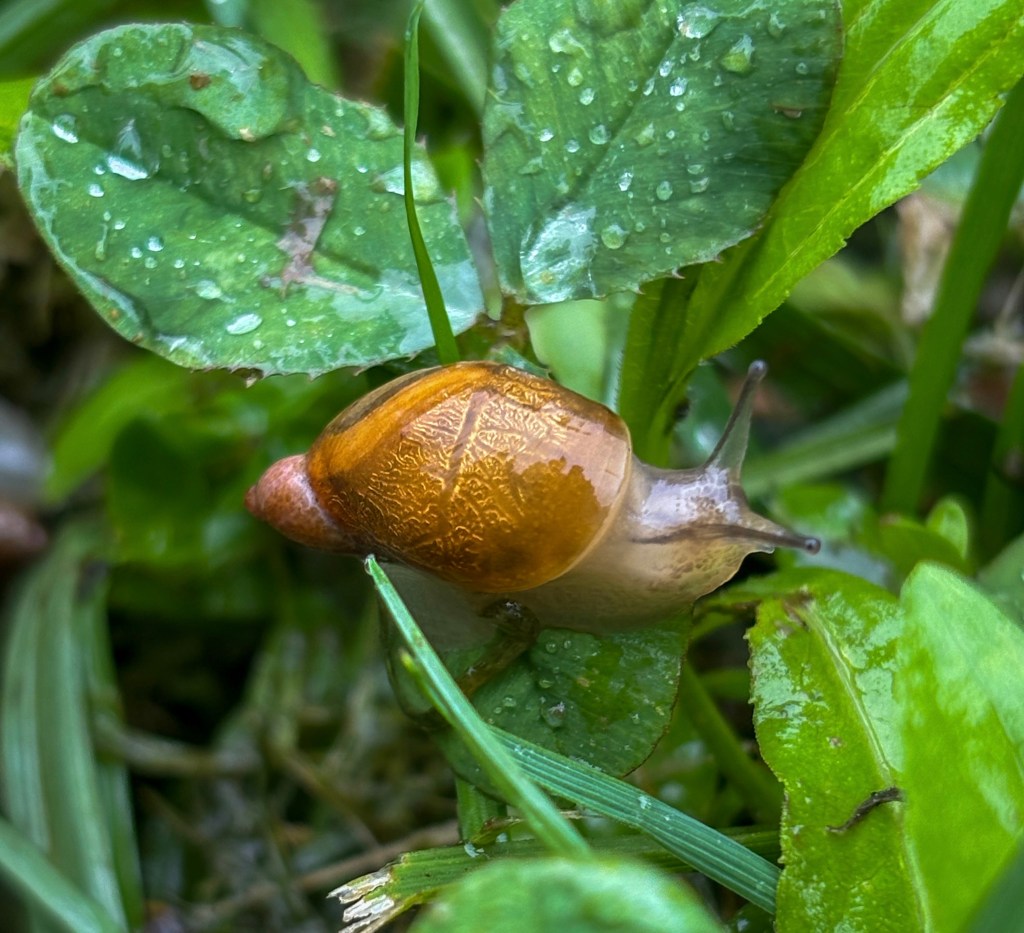
Many folks see a snail and are repulsed by their slimy bodies and unconventional appearance. Although, looking a little closer will uncover a fascinating species that is quickly overlooked.
Anatomic Composition
Snails have a complex anatomy and are comprised of organ systems that deviate substantially in regards to most animals. Like other gastropods, snails possess three main body parts; the foot, the mantle and the radula.
Foot
You are probably able to guess that the “foot” is used to get around. The foot is located on the underside of the jelly-like body and is considered an organ. It will expand and contract the muscles within to propel itself forward, and leave the famous slime trail behind. This muscle technique causes a rippling effect that help with sliding across the slime.
Mantle
The mantle can be located on the top of the soft body. This organ actually produces the snail’s shell through an opening, which will continue growing throughout its life. Its shell is made up of a combination of secretions including; calcium carbonate and conchiolin (a protein). The mantle and shell are used as a protective surface but have internal functions too. Inside the organ the lung (or gills for aqueous snails) are located, and it is also used to exchange gas for other bodily processes.
Radula
A snail’s radula has a primary use for feeding. It is the “head” part of the snail and is comprised of teeth, the esophagus, and other organs to assist with breaking down food. The teeth are assorted in rows and are made of a tough, flexible material (chitinous).
Habits
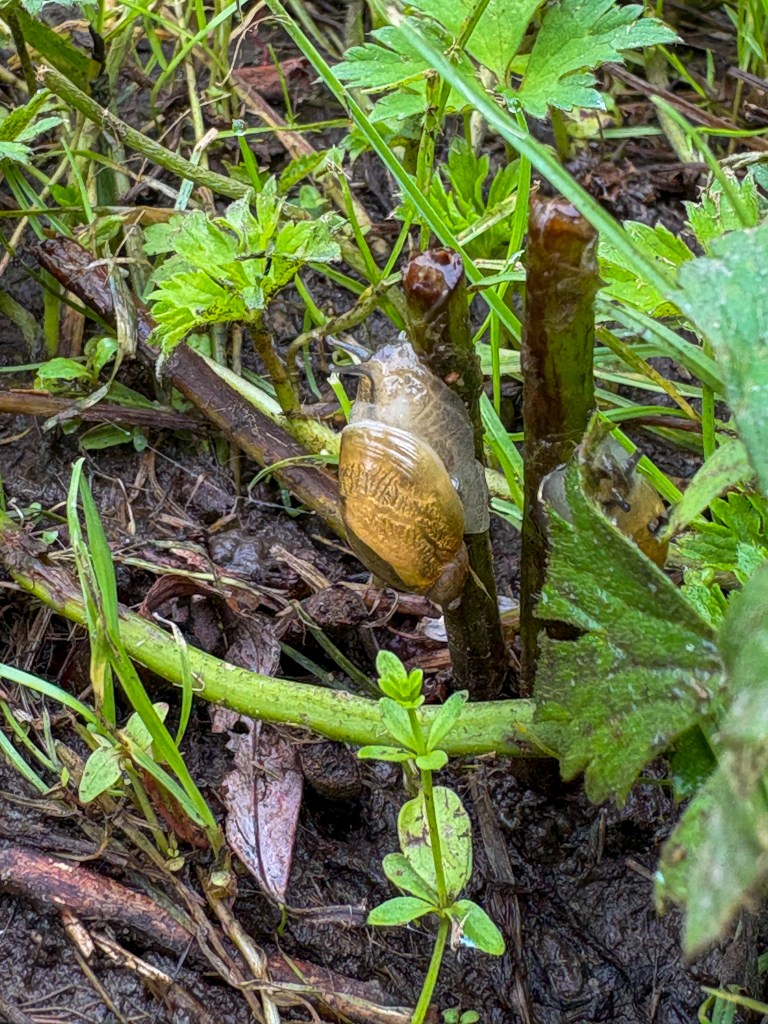
The snails we find in our yard, and similar species, prefer to consume decaying plants, algae and different fungi. When not readily available our sludgey friends will eat live plants too. The snail will use its flexible radula and rows of teeth to scrape against the plants. Then ingest the fractured material.
Our snails grow up fast. In fact, once they hatch they are already young adults. The only changes the snail must undergo is, after enough calcium consumption, it will develop its shell. Most snails by nature are hermaphroditic, meaning they are born with male and female reproductive parts. Additionally, they are able to reproduce sexually AND asexually. This comes in handy if a snail lacks the charismatic necessities to acquire a mate (joke).
Once the reproductive process is complete, the snail will lay a batch of eggs that usually look like bubbles. Thus the circle of life repeats itself.
A group of snails is called a escargatoire, a rout, or a walk.
Human VS Snail
The snail human relationship is complex. Many humans see them as pests, a fair declaration considering their unattractive attributes. They are also associated with a variety of parasitic diseases.
On the flip side, escargot is considered a delicious cuisine in France. African land snails can be produced at scale for food. And Indonesia and Bulgaria have well known snail dishes too. Snails have also been consumed as a last resort throughout different famines.
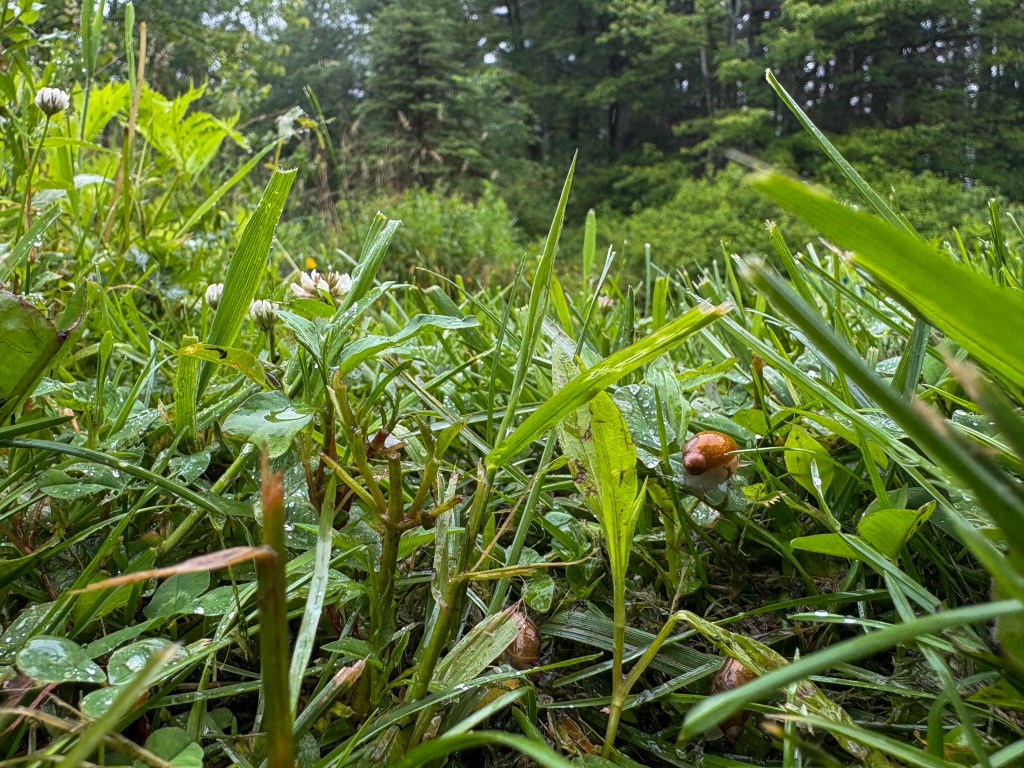
Prelude: A Snail’s Bad Day
Behemothic legs barrage the homes adjacent to your sodden abode, sending violent tremors up your shell. A titan barrels through without acknowledgment of the destruction it has caused. The gargantuan beings’ foot catapults you helplessly into the air. Flying high like the winged devourers, you can see the world is much larger than you previously thought. A hydrous explosion emanates from the pond large enough to engulf hundreds of fellow escargatoires. You plummet toward a foreign terrain and brace for impact. *THUD*
Regaining consciousness in a jungle of dry terrain, the incandescent inferno in the sky radiates violently. Its attempts to sizzle you into dehydrated bird food are close to success. The avian threats will be relentless, but you must venture back to water if you have any hopes to survive. A perilous journey for the once abundant elixir of life awaits you…
 Our Backyard Universe
Leave a comment